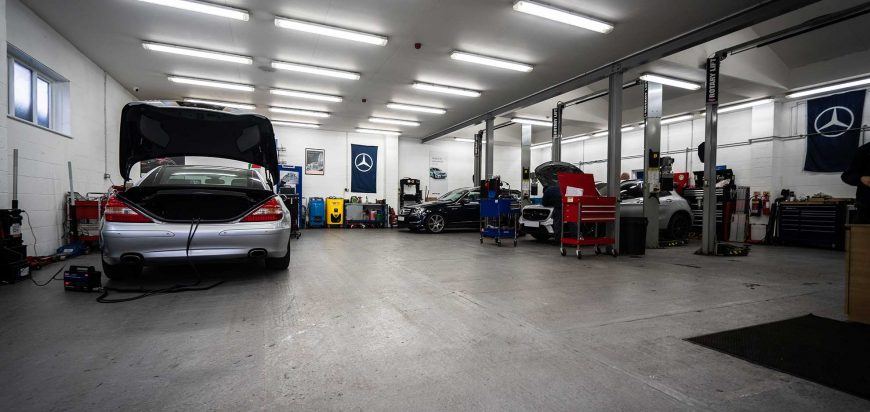

Mercedes-Benz ownership comes with certain expectations about maintenance, but the internet is full of conflicting advice, well-meaning but incorrect suggestions, and outright myths that can lead to expensive problems. Understanding what your Mercedes really needs—and separating fact from fiction—helps you maintain your vehicle properly without wasting money on unnecessary services or damaging your car through neglect.
This comprehensive guide debunks common Mercedes maintenance myths and explains what you actually need to service and when, based on manufacturer recommendations and real-world engineering requirements.
Myth 1: “Low Mileage Means You Can Skip Annual Services”
The Myth: If you only drive 3,000 or 5,000 miles per year, you don’t need to service your Mercedes annually. You should only service when you reach the mileage interval, not based on time.
The Reality: Mercedes service intervals are based on whichever comes first—time or mileage, typically 12 months or 15,500 miles. Even if you’ve only driven 2,000 miles, annual servicing remains essential for several critical reasons.
Why Time Matters:
Engine oil degrades over time even when the vehicle isn’t being driven. Combustion byproducts suspended in oil, moisture contamination from condensation, and chemical breakdown of oil additives all occur regardless of mileage. Oil sitting in an engine for 18 months becomes acidic and loses its protective properties, allowing corrosion and accelerated wear when you do drive.
Rubber components including seals, hoses, and belts deteriorate from age and environmental exposure, not just use. A brake hose doesn’t know whether your car has driven 2,000 or 20,000 miles—it ages based on time and exposure to heat, moisture, and temperature cycles.
Brake fluid absorbs moisture from the atmosphere over time. After 12 to 24 months, brake fluid moisture content increases significantly, reducing braking effectiveness and causing internal corrosion of expensive components like ABS units and brake calipers. This degradation happens whether you drive 1,000 miles or 15,000 miles.
Battery health deteriorates from age and shallow discharge cycles. Low-mileage vehicles often suffer more battery problems than high-mileage ones because short trips never fully recharge the battery, leading to sulfation and reduced capacity. Annual service checks catch developing battery issues before you’re stranded with a dead battery.
The Consequences:
Skipping annual services on low-mileage vehicles leads to premature component failures, increased repair costs, and reduced vehicle reliability. The £200 to £400 you save by skipping a service often results in £1,000+ repair bills when aged fluids cause component damage or deteriorated parts fail unexpectedly.
Your warranty may also be voided. Mercedes warranties explicitly require servicing according to both time and mileage intervals. Claiming “I didn’t drive much” won’t protect warranty coverage when you’ve skipped time-based service requirements.
Myth 2: “A-Service is Just an Oil Change—It’s Optional”
The Myth: A-Service is just a basic oil change that doesn’t really matter. You can do it yourself or skip it if the car seems fine. The expensive B-Service is what really matters.
The Reality: A-Service is far more comprehensive than a simple oil change and absolutely mandatory for proper vehicle maintenance and warranty protection.
What A-Service Actually Includes:
A-Service involves engine oil and filter replacement using exact Mercedes-approved specifications, but it also includes comprehensive vehicle inspection covering brakes, suspension, lights, tyres, fluid levels, and safety systems. Technicians reset service indicators, check for stored fault codes, and inspect for developing issues like fluid leaks, worn components, or unusual wear patterns.
The service ensures your Mercedes meets roadworthiness standards between MOT tests and identifies problems before they cause breakdowns or safety issues. The inspection component of A-Service is just as valuable as the oil change itself.
Why It Matters:
Modern Mercedes engines have extremely tight tolerances and sophisticated engineering. Using incorrect oil specifications or extending change intervals beyond recommendations causes accelerated wear that accumulates silently until expensive failures occur. The turbochargers in many Mercedes engines are particularly sensitive to oil quality and change intervals.
The inspection components of A-Service regularly catch developing problems—worn brake pads, perishing tyres, leaking hoses, or electrical issues—while they’re still inexpensive to fix. Missing these inspections means problems progress until they cause breakdowns, safety hazards, or damage to other components.
The DIY Question:
While technically capable owners can change oil themselves, they miss the comprehensive inspection, cannot properly reset service indicators, and don’t have access to diagnostic equipment that identifies developing faults. A proper A-Service at an authorized facility costs £200 to £350 and provides value far beyond what DIY oil changes accomplish.
Mercedes-Benz service schedules alternate between A-Service and B-Service, typically annually. Both are essential, not optional. Treating A-Service as unimportant compromises your vehicle’s reliability and potentially voids warranty coverage.
Myth 3: “Independent Garages Can’t Service Mercedes Properly”
The Myth: Only Mercedes main dealers have the knowledge, equipment, and parts to service Mercedes vehicles correctly. Using independent specialists will damage your car or void warranties.
The Reality: The situation is more nuanced than this myth suggests, and quality independent Mercedes specialists can service your vehicle to the same standards as main dealers.
What Independent Specialists Can Do:
Reputable independent Mercedes specialists employ technicians with Mercedes training and experience, often including former main dealer technicians. They invest in Mercedes-specific diagnostic equipment, technical information subscriptions, and specialized tools required for proper service.
Quality independents use genuine Mercedes parts or approved equivalent specifications, ensuring components meet manufacturer standards. They can access Mercedes digital service records, perform services that maintain warranty coverage, and provide the same quality work as main dealers at typically 30% to 40% lower prices.
Warranty Considerations:
Under European Block Exemption regulations, you can use independent specialists for servicing while maintaining warranty coverage, provided they use parts of equivalent quality and follow manufacturer specifications. The key requirement is that servicing meets Mercedes standards, not that it’s performed at a specific type of facility.
For vehicles under warranty or service plans, verify that your chosen independent specialist can access Mercedes digital service records and provide documentation that satisfies warranty requirements. Most established Mercedes specialists understand these requirements and work within them routinely.
When Main Dealers Make Sense:
Brand new Mercedes under warranty often benefit from main dealer servicing, particularly during the initial warranty period. Dealer service history typically adds more resale value than independent history, though this premium is decreasing as quality independents become more established.
Complex electrical issues, software updates, or recall campaigns may require main dealer facilities with the latest factory technical information and equipment. Some specialized repairs on newest models may also require dealer-specific access to technical data or programming equipment.
The Key Distinction:
The myth should really be “unauthorized, unqualified garages can’t service Mercedes properly”—which is absolutely true. Your local general mechanic without Mercedes training, equipment, or knowledge will likely cause problems. However, specialized, qualified, equipped Mercedes independents provide excellent service at better value than main dealers in most cases.
Myth 4: “Transmission Fluid is Lifetime—Never Needs Changing”
The Myth: Mercedes specifies “lifetime” transmission fluid in many automatic gearboxes, meaning the fluid never needs changing and the transmission is sealed for life.
The Reality: This is one of the most damaging myths in Mercedes ownership. “Lifetime” refers to the warranty period or expected ownership duration, not the actual life of the transmission or vehicle.
Why Transmission Fluid Degrades:
Automatic transmission fluid serves multiple functions: lubricating moving components, operating hydraulic clutches, cooling internal parts, and protecting against wear. Over time and use, transmission fluid breaks down from heat, friction, and contamination.
Degraded transmission fluid becomes less effective at lubrication and cooling, develops harmful varnish deposits, and loses the friction characteristics required for smooth gear changes. These changes occur gradually, often without obvious symptoms until significant damage has occurred.
Real-World Recommendations:
Independent Mercedes specialists and transmission experts universally recommend changing automatic transmission fluid and filters every 40,000 to 60,000 miles, regardless of official “lifetime” claims. This preventative maintenance dramatically extends transmission life and maintains smooth operation.
Mercedes themselves have quietly revised recommendations for some models, now specifying transmission services at specific intervals rather than claiming lifetime fluid. This revision acknowledges what the industry has known for years—transmission fluid absolutely requires periodic replacement.
The Cost-Benefit Calculation:
Transmission fluid and filter service costs approximately £300 to £500 depending on the model and gearbox type. A replacement automatic transmission costs £3,000 to £8,000 including fitting. Transmission rebuilds cost £2,000 to £5,000. The preventative service cost is tiny compared to repair costs from fluid neglect.
Vehicles with regularly changed transmission fluid typically experience smooth gear changes throughout their life and avoid the rough shifting, delayed engagement, and eventual failure common in vehicles with neglected transmissions.
Don’t Trust “Lifetime” Claims:
The same applies to other fluids with “lifetime” designations. Differential oil, power steering fluid, and brake fluid all benefit from periodic replacement regardless of manufacturer claims. Modern marketing has created these “lifetime” specifications to reduce perceived maintenance costs and improve competitive positioning, but the engineering reality hasn’t changed—fluids degrade and require replacement.
Myth 5: “You Can Use Any Oil as Long as It’s the Right Viscosity”
The Myth: As long as oil is the correct viscosity grade (like 5W-30), it doesn’t matter which brand or specification you use. Oil is oil, and expensive branded oils are just marketing.
The Reality: Mercedes engines require oil meeting specific approval specifications, not just correct viscosity. Using incorrect oil, even if it’s the right thickness, can cause serious engine damage and void warranty coverage.
Mercedes Oil Specifications:
Mercedes-Benz specifies oil approvals like MB 229.3, MB 229.5, or MB 229.52, among others. These specifications define performance characteristics including wear protection, deposit control, fuel economy, emissions compatibility, and extended drain interval capability.
Different Mercedes engines require different specifications based on their design, emissions equipment, and performance characteristics. A diesel engine with diesel particulate filter requires different oil than a petrol engine. Turbocharged engines have different requirements than naturally aspirated ones.
Why Specifications Matter:
Modern Mercedes engines have extremely tight tolerances, sophisticated turbochargers, and sensitive emissions equipment. Oil must protect components operating under extreme conditions while remaining compatible with catalytic converters and particulate filters.
Incorrect oil can cause turbocharger damage from inadequate lubrication under high temperatures, camshaft wear from insufficient protection, timing chain stretch from improper viscosity characteristics, and catalytic converter or DPF poisoning from incompatible additives.
The Viscosity Confusion:
Viscosity grades like 5W-30 describe oil thickness at different temperatures but say nothing about protective additives, friction modifiers, detergents, or other critical characteristics. Two oils with identical viscosity can have completely different protective capabilities and Mercedes approval status.
Using supermarket or budget oil because it’s “5W-30” and seems cheaper than approved oil is false economy. Engine repairs from oil-related damage easily exceed £3,000 to £10,000, while the difference between cheap and correct oil for an annual service is perhaps £30 to £50.
Always Check Approvals:
When adding or changing oil, verify it displays the appropriate Mercedes-Benz approval specification on the container. Your handbook or service booklet specifies the required approval. Authorized service providers automatically use correct specifications, but if you top up oil yourself or use non-specialist facilities, you must verify specifications yourself.
Myth 6: “AdBlue is Optional—You Can Drive Without It”
The Myth: AdBlue is just for emissions control and doesn’t affect how the car runs. You can ignore AdBlue warnings and continue driving without any real consequences.
The Reality: For diesel Mercedes equipped with AdBlue systems (most diesels from 2015 onwards), AdBlue is absolutely mandatory and the vehicle will refuse to restart once AdBlue is completely depleted.
How AdBlue Systems Work:
AdBlue (diesel exhaust fluid) is injected into the exhaust system where it breaks down harmful nitrogen oxide emissions, allowing Mercedes diesel engines to meet strict Euro 6 emissions standards. The system monitors AdBlue levels and quality, warning you when levels become low.
The system provides progressive warnings starting at approximately 1,500 miles of remaining range, increasing in urgency as depletion approaches. Final warnings indicate exactly how many miles until the AdBlue tank is empty.
The Hard Lockout:
When AdBlue is completely depleted, the vehicle will start and run normally until you turn off the engine. Once switched off, however, the vehicle absolutely will not restart. This isn’t a malfunction—it’s deliberate programming mandated by emissions regulations.
You’ll be stuck wherever you’ve parked until you add AdBlue and reset the system. This might mean expensive recovery to a service station or location where you can obtain AdBlue. Some systems require dealer reset even after refilling, adding further complications.
Why It Matters:
Running low on AdBlue or ignoring warnings guarantees you’ll eventually be stranded at the worst possible moment. Refilling costs £10 to £20 for a container from a petrol station and takes five minutes. Recovery from a failed restart costs £100+ and causes significant inconvenience.
AdBlue systems occasionally develop faults requiring professional diagnosis. Warning messages about AdBlue quality, system malfunctions, or unexpected consumption rates require investigation at authorized service facilities equipped to diagnose AdBlue system issues.
Keep It Topped Up:
Make AdBlue level checking part of your routine, similar to fuel and screen wash. Top up when levels reach half to avoid any risk of depletion. Store a container of AdBlue in your garage for convenient refilling. This simple attention prevents the expense and inconvenience of AdBlue-related breakdowns.
Myth 7: “Modern Mercedes Don’t Need Warm-Up Time”
The Myth: Modern fuel injection and engine management mean you can start your Mercedes and drive off immediately at full throttle. Warm-up periods are outdated advice from older vehicles.
The Reality: While prolonged idling warm-up is unnecessary and wasteful, modern Mercedes engines still benefit from gentle treatment until fully warmed to operating temperature.
What Happens During Warm-Up:
Cold engines run with enriched fuel mixtures, reduced oil pressure (due to thicker cold oil), and tighter component clearances. Materials haven’t expanded to normal running clearances, lubrication isn’t fully effective, and catalytic converters haven’t reached operating temperature.
Immediate hard acceleration or high engine speeds when cold accelerates wear on pistons, cylinder bores, valve trains, and bearings. Oil takes time to fully circulate and reach all components, meaning brief oil starvation can occur if you immediately demand maximum performance.
The Right Approach:
Start your Mercedes and drive gently after 30 seconds to one minute of idling—enough time for oil to circulate but not long enough to waste fuel through extended idling. Keep engine speeds moderate (below 3,000 RPM), avoid harsh acceleration, and don’t demand full power until the engine temperature gauge reaches normal operating position.
This gentle warm-up period typically requires five to ten minutes of normal driving. Once the temperature gauge reads normal and the engine feels smooth and responsive, you can use normal performance characteristics without concern.
Why It Matters:
Most engine wear occurs during cold starts and the initial warm-up period. Treating your engine gently when cold significantly extends its service life. The difference between gentle and harsh warm-up treatment can be tens of thousands of miles of additional engine life—meaningful considering that Mercedes engines should easily exceed 200,000 miles with proper care.
Myth 8: “Premium Fuel Isn’t Necessary—Regular Unleaded is Fine”
The Myth: Premium fuel (98 or 99 octane) is a marketing gimmick. Regular 95 octane fuel works fine in any Mercedes and the engine will adjust automatically with no performance impact.
The Reality: While Mercedes engines with knock sensors can adjust for lower octane fuel, using regular unleaded when premium is specified reduces performance, increases fuel consumption, and potentially causes long-term engine problems.
Why Octane Rating Matters:
Octane rating measures fuel’s resistance to premature ignition (knocking or pinging). High-performance Mercedes engines with turbocharging and high compression ratios require high-octane fuel to prevent destructive knocking under load.
When you use lower octane fuel than specified, knock sensors detect incipient knocking and retard ignition timing to prevent damage. This timing retardation reduces power output, increases fuel consumption (offsetting any cost savings from cheaper fuel), and potentially creates higher emissions.
Long-Term Effects:
Consistently using lower octane fuel than specified can cause carbon buildup, reduce engine lifespan, and potentially damage pistons or cause pre-ignition issues over time. While modern engine management prevents catastrophic immediate damage, the cumulative effects of constant knock-prevention timing adjustments aren’t beneficial.
Performance differences between 95 and 98/99 octane fuel are noticeable in powerful Mercedes models. Reduced acceleration, diminished throttle response, and worse fuel economy all result from using budget fuel in engines designed for premium.
When Regular is Acceptable:
For older Mercedes with naturally aspirated engines and lower compression ratios, regular 95 octane fuel is typically specified and completely adequate. Check your fuel filler cap or handbook for the specified octane rating—if it says 95 RON minimum, regular unleaded is fine.
However, if your handbook specifies 98 or 99 RON, using this premium fuel is essential for proper performance and engine protection. The modest cost difference—perhaps £5 to £8 per tank—is insignificant compared to the performance loss and potential damage from incorrect fuel.
Myth 9: “Air Filters Only Need Replacing When They Look Dirty”
The Myth: You can inspect air filters visually and only replace them when they appear heavily contaminated. Clean-looking filters are fine regardless of mileage or time.
The Reality: Air filter efficiency degrades long before visible contamination becomes obvious, and Mercedes service schedules specify replacement intervals for good reasons.
How Air Filters Work:
Engine air filters trap particles too small to see with the naked eye—dust, pollen, and microscopic debris that would cause cylinder bore wear if they entered the engine. As filters capture particles, they become progressively restricted, reducing airflow even when they don’t appear particularly dirty.
Restricted airflow reduces engine performance, increases fuel consumption, and can trigger engine management system adaptations that affect long-term performance. Modern turbocharged engines are particularly sensitive to intake restrictions.
Scheduled Replacement:
Mercedes typically specifies air filter replacement every two years or 30,000 to 40,000 miles depending on the model and operating conditions. These intervals account for filter efficiency degradation, not just visible contamination.
Vehicles operating in dusty environments or heavy traffic may require more frequent replacement. Urban driving in polluted conditions accelerates filter contamination compared to rural motorway driving.
Cabin Air Filters Too:
The same principle applies to cabin air filters (pollen filters) that many owners completely forget about. These filters protect occupant health by removing pollutants, pollen, and particles from ventilation air.
Cabin filters should be replaced annually or every 15,000 to 20,000 miles. Neglected cabin filters become breeding grounds for bacteria and mold, create musty smells, and reduce heating and air conditioning effectiveness. The filter costs £15 to £30 and takes minutes to replace—there’s no excuse for neglecting them.
Myth 10: “Brake Fluid Doesn’t Need Regular Changing”
The Myth: Brake fluid lasts indefinitely as long as brake system components aren’t leaking. Brake fluid changes are unnecessary and just a way for garages to increase service bills.
The Reality: Brake fluid is hygroscopic, meaning it absorbs moisture from the atmosphere. This moisture contamination degrades brake performance and causes expensive internal corrosion, making regular brake fluid changes essential for safety and system longevity.
Why Moisture Matters:
As brake fluid absorbs moisture, its boiling point decreases significantly. Under hard braking when brake components become very hot, moisture-contaminated fluid can boil, creating vapor bubbles that compress rather than transmitting hydraulic pressure. This causes complete or partial brake failure—an obviously dangerous situation.
Moisture in brake fluid also causes internal corrosion of expensive components including ABS units, brake calipers, wheel cylinders, and master cylinders. ABS units cost £800 to £2,000 to replace, while brake calipers cost £150 to £400 each—expenses that proper brake fluid maintenance prevents.
Replacement Intervals:
Mercedes typically recommends brake fluid replacement every two years regardless of mileage. This interval prevents moisture contamination from reaching dangerous levels while protecting internal components from corrosion.
Brake fluid change costs approximately £60 to £100 and takes less than an hour. This modest investment protects brake system components worth thousands of pounds and maintains the braking performance Mercedes engineered into your vehicle.
Testing Brake Fluid:
Service centers can test brake fluid moisture content and boiling point. If you’re uncertain when your brake fluid was last changed, request testing. If moisture content exceeds 3% or boiling point has fallen below safe thresholds, immediate replacement is essential for safety.
What You Actually Need: Mercedes Service Schedule Basics
Having debunked common myths, here’s what your Mercedes actually requires for proper maintenance.
Annual Services (A-Service and B-Service):
Mercedes schedules alternate between A-Service (interim) and B-Service (comprehensive) approximately annually or every 15,500 miles, whichever comes first. Both are mandatory, not optional.
A-Service includes engine oil and filter, comprehensive inspection, and service indicator reset. B-Service includes everything in A-Service plus additional filter replacements, more extensive inspections, and additional fluid checks.
Time-Based Services:
Every two years: brake fluid replacement, cabin filter replacement (if not included in annual service).
Every three to four years: coolant replacement, though modern long-life coolants may extend this to six years depending on the model.
Every four to five years: spark plug replacement for petrol engines, though some models require more frequent replacement.
Mileage-Based Services:
Every 40,000 to 60,000 miles: transmission fluid and filter (despite “lifetime” claims).
Every 60,000 to 80,000 miles: timing chain inspection (for chain-driven engines) or belt replacement (for belt-driven engines).
Every 75,000 to 100,000 miles: differential oil replacement (models with rear or four-wheel drive).
As Required:
Tyres: Replace when tread depth reaches 3mm (legal minimum is 1.6mm, but safety and performance degrade before this).
Brake pads and discs: Replace based on inspection findings, typically every 30,000 to 60,000 miles depending on driving style.
Battery: Test annually and replace when voltage or capacity falls below acceptable levels, typically every four to six years.
Wiper blades: Replace annually or when deteriorated.
Conclusion
Mercedes maintenance myths often stem from misunderstandings, wishful thinking about reduced maintenance costs, or outdated information that no longer applies to modern vehicles. The reality is that Mercedes-Benz engineering requires specific maintenance at specific intervals to deliver the reliability, performance, and longevity these vehicles are designed to provide.
Following manufacturer service schedules, using correct specifications for fluids and parts, and addressing maintenance proactively rather than reactively protects your investment and prevents the expensive repairs that result from neglect. The money saved by skipping services or using incorrect specifications is dwarfed by the costs of premature component failures and reduced vehicle value.
Quality independent Mercedes specialists can service your vehicle to the same standards as main dealers at lower costs, transmission fluid absolutely requires changing despite “lifetime” claims, low mileage doesn’t eliminate the need for annual servicing, and A-Service is far more than an optional oil change.
Understanding these realities and maintaining your Mercedes properly ensures it delivers the driving experience and reliability Mercedes-Benz built into the vehicle. Proper maintenance isn’t an expense—it’s an investment in reliability, safety, and long-term value that pays dividends throughout your ownership experience.
For Mercedes owners in the Wirral area, working with knowledgeable specialists who understand these maintenance requirements and can separate myths from reality ensures your vehicle receives the care it needs without unnecessary services or expenses.


