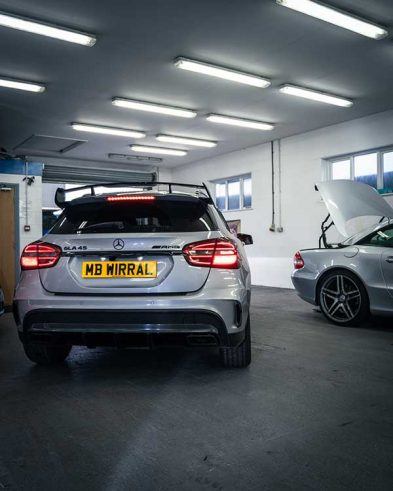

Two 2016 C220d AMG Line models, both Obsidian Black, both with 19-inch alloys, identical specification from the same production month. Five years later, one has been utterly reliable—minimal repairs beyond servicing, no major issues, runs perfectly at 75,000 miles. The other has required £4,500 in repairs, suffered repeated DPF problems, eaten front suspension components, and now has oil consumption issues that weren’t there two years ago. Same model, same specification, same age—completely different reliability outcomes.
Internet forums declare “avoid the 2016 C220d, they’re unreliable.” Except thousands of them are perfectly reliable. What forums don’t capture: the 2016 C220d isn’t inherently unreliable or reliable. Its reliability depends overwhelmingly on how it’s been driven, serviced, and maintained. The model has certain vulnerabilities—all models do—but whether those vulnerabilities become expensive problems or remain theoretical possibilities depends on the life the car has lived.
For Mercedes buyers in Wirral and Cheshire evaluating used models or puzzled why their “reliable Mercedes” has been problematic while their friend’s “unreliable model” runs flawlessly, understanding that reliability is created rather than predetermined transforms how you select, maintain, and own these vehicles. Because “this model is reliable” means very little without knowing the specific car’s history, usage pattern, and maintenance approach. A well-maintained “unreliable” model will outlast an abused “reliable” one every single time.
This analysis explains the six factors determining whether any specific Mercedes becomes reliable or problematic, demonstrates through real examples how identical models diverge in outcomes, quantifies the reliability impact of different usage patterns and maintenance approaches, and provides framework for creating reliability in whatever Mercedes you own or are considering.
The Six Reliability Determinants
Mercedes reliability isn’t stamped at the factory. It’s built (or destroyed) through these six factors.
1. Driving Pattern: Urban vs Motorway Miles
Not all miles are equal. 60,000 miles of motorway cruising creates completely different wear than 60,000 miles of urban stop-start traffic.
Motorway mile characteristics:
- Engine runs at consistent temperature and load
- Long periods at optimal operating conditions
- Minimal thermal cycling (engine warm-up and cool-down cycles)
- Lower brake wear (minimal braking required)
- Reduced clutch/transmission stress (minimal gear changes)
- DPF regeneration occurs naturally during sustained driving (diesel)
Urban mile characteristics:
- Frequent cold starts (high wear periods)
- Constant thermal cycling (warm up, cool down, repeat)
- Heavy brake wear (constant stopping)
- High transmission stress (continuous gear changes)
- Engine rarely reaches optimal operating temperature for extended periods
- DPF struggles to regenerate (diesel) leading to carbon buildup
Real example: Two 2015 E220d models
Car A: Company car, 85% motorway miles (sales rep covering territory)
- 90,000 miles in 5 years
- Maintenance: Servicing only, no repairs
- DPF regeneration: No issues, occurs naturally during driving
- Engine condition at 90k: Excellent, minimal carbon buildup
- Repair costs 5 years: £850 (brake pads at 60k miles only)
Car B: Urban delivery vehicle, 85% city miles (local courier)
- 70,000 miles in 5 years
- Maintenance: Servicing plus multiple repairs
- DPF regeneration: Forced regenerations required 4× at £150 each
- DPF replacement: Year 4, £1,800
- Turbo issues: EGR valve carbon buildup, £650
- Brake pads: Replaced twice (30k and 55k), £560 total
- Repair costs 5 years: £3,560
Same model, 20,000 fewer miles, 4× higher repair costs because of usage pattern.
The diesel urban problem: Modern diesels with DPFs are designed for regular motorway driving. Urban-only use prevents DPF regeneration, causing:
- Carbon accumulation blocking DPF
- Back-pressure increasing engine wear
- Oil contamination from aborted regeneration attempts
- Reduced performance and fuel economy
- Eventually: DPF replacement (£1,500-£2,500)
Petrol engines cope better with urban use but still suffer:
- Carbon buildup on direct-injection intake valves
- Reduced throttle response over time
- More frequent spark plug replacement
- Higher wear on engine components
Key insight: A diesel Mercedes doing 20,000+ motorway miles annually will be more reliable than the same model doing 12,000 urban miles, despite higher absolute mileage.
2. Service History Quality: Timing and Specification
Service history isn’t binary (exists or doesn’t). Quality varies enormously.
Scenario A: Perfect service history
- Serviced exactly on schedule (every 12 months or manufacturer intervals)
- Genuine or OE-specification parts used
- All recommended work performed
- Independent specialist with Mercedes expertise (or main dealer)
- Complete documentation of all work
- Fluids changed at appropriate intervals (not just manufacturer minimums)
Scenario B: Adequate service history
- Serviced approximately on schedule (within 2-3 months of due date)
- Mix of genuine and aftermarket parts
- Most recommended work performed, some deferred
- Competent independent garage
- Reasonable documentation
Scenario C: Questionable service history
- Serviced irregularly (12-18 month gaps)
- Budget parts, unknown brands
- Only minimum work performed
- Generic garage, no Mercedes specialization
- Incomplete documentation
- Transmission fluid “lifetime” never changed
Scenario D: Poor service history
- Services missed entirely (2+ year gaps)
- DIY oil changes with incorrect grade
- Repairs deferred until failures occur
- No documentation
- “Lifetime” fluids actually lifetime
Reliability impact over 8 years:
Scenario A: Minimal issues, £2,500-£3,500 total repairs Scenario B: Moderate issues, £4,000-£6,000 total repairs Scenario C: Significant issues, £6,500-£10,000 total repairs Scenario D: Major problems, £10,000-£18,000 total repairs plus potential early end-of-life
Critical service items affecting reliability:
Engine oil changes:
- Manufacturer interval: 15,000 miles or 12 months
- Reliability-optimizing interval: 10,000 miles or 12 months
- Impact of extended intervals: Increased engine wear, sludge buildup, timing chain wear, turbo degradation
Transmission fluid:
- Manufacturer claim: “Lifetime fill” (means ~150,000 miles in practice)
- Reliability-optimizing change: 60,000-80,000 miles
- Impact of never changing: Degraded shift quality, clutch wear, eventual transmission failure
Brake fluid:
- Manufacturer interval: 2 years
- Often skipped because “brakes work fine”
- Impact: Internal corrosion of ABS components, eventual expensive ABS unit replacement
Coolant:
- Manufacturer interval: 10+ years or 150,000 miles
- Reliability-optimizing: 5 years or 100,000 miles
- Impact of neglect: Corrosion, water pump failure, thermostat issues, head gasket stress
Air filters:
- Manufacturer interval: Variable by model
- Often skipped “to save money”
- Impact: Reduced performance, increased fuel consumption, MAF sensor contamination
Real example: Two 2014 C-Class petrol models
Car A: Perfect service history
- Oil changes: Every 10,000 miles (manufacturer says 15,000)
- Transmission fluid: Changed at 65,000 miles
- All filters changed on schedule
- Spark plugs: Replaced at 60,000 miles (proactively)
- At 100,000 miles: Runs like new, no major issues
- Total repairs 100k miles: £1,800 (wear items only)
Car B: Minimum service history
- Oil changes: Every 15,000-18,000 miles (exceeded intervals)
- Transmission fluid: Never changed (“lifetime fill”)
- Air filters: Changed when very dirty
- Spark plugs: Changed when misfiring started (85,000 miles)
- At 100,000 miles: Engine rough, transmission shifts harshly
- Total repairs 100k miles: £6,400 (carbon cleaning £450, timing chain tensioner £1,200, transmission service attempting to recover shift quality £600, injector replacement £1,800, various other issues £2,350)
Difference: £4,600 from service quality alone.
3. Driving Style: Mechanical Sympathy vs Abuse
How you drive matters as much as how often you service.
Sympathetic driving:
- Warming up before demanding performance (30 seconds idle, then gentle driving until temperature gauge shows normal)
- Progressive acceleration and braking (not on/off throttle and brake)
- Allowing turbo to cool before switching off (30 seconds idling after hard driving)
- Smooth gearshifts in manual mode
- Avoiding full-throttle when engine cold
- Regular use of full rev range (occasionally) to prevent carbon buildup
Harsh driving:
- Immediate hard acceleration from cold start
- Frequent full-throttle acceleration
- Hard braking from speed
- Aggressive manual gearshifts
- Constant high-rev driving or never using upper rev range
- Shutting off immediately after motorway driving
Component wear comparison (60,000 miles):
Sympathetic driver:
- Brake pads/discs: 60-80,000 mile lifespan
- Clutch (manual): 100,000+ miles typical
- Suspension bushes: 80,000-100,000 miles
- Engine mounts: 100,000+ miles
- Turbo: Full lifespan without issues
Harsh driver:
- Brake pads/discs: 30-40,000 mile lifespan (2× replacement cycle)
- Clutch (manual): 50,000-70,000 miles
- Suspension bushes: 50,000-60,000 miles
- Engine mounts: 60,000-70,000 miles
- Turbo: Potential issues from 80,000 miles
Cost impact over 100,000 miles:
- Sympathetic: £2,500 wear items
- Harsh: £6,000 wear items + £2,000 additional premature failures
- Difference: £5,500
The cold-start damage: Most engine wear occurs during first 30 seconds after cold start before oil pressure builds fully and components reach operating temperature. A driver who immediately races away cold multiplies wear exponentially.
The turbo cool-down factor: Shutting off a hot turbo (after sustained high-speed driving) while oil is still circulating at high temperature can cause oil coking (burning) inside the turbo bearings. This degrades lubrication, eventually leading to turbo failure. 30 seconds idling allows cooldown, preventing this damage.
4. Environment: Climate and Road Conditions
Where the car lives affects long-term condition.
Coastal environments (Wirral, coastal Cheshire):
- Salt spray accelerates corrosion
- Underbody components rust faster
- Brake components corrode more readily
- Exhaust systems have reduced lifespan
Mitigation: Regular underbody washing, corrosion protection treatment, more frequent brake inspection
Urban environments:
- Potholed roads damage suspension
- Speed bumps stress suspension and underbody
- Tight parking damages wheels/tyres
- Air pollution accelerates exterior degradation
Mitigation: Careful driving, regular suspension checks, protective wheel coatings
Rural environments:
- Gravel and debris damage paint and windscreens
- Mud and dirt accelerate underbody wear
- Limited street lighting increases wildlife strike risk
- Agricultural vehicle debris on roads
Mitigation: Paint protection film, regular underbody cleaning
Garaged vs street-parked:
Garaged:
- Protected from weather extremes
- Reduced temperature cycling
- Lower theft risk
- Cleaner environment reducing corrosion
- Typical benefit: 15-25% longer life for exterior components, battery, rubber seals
Street-parked:
- Constant weather exposure
- Temperature extremes affecting battery, rubber, paint
- Higher theft/vandalism risk
- Reduced longevity of exterior components
Real example: Two 2013 E-Class models, coastal vs inland
Car A: Inland Cheshire, garaged
- 8 years old, minimal rust
- Original exhaust system still fitted
- Brake calipers in excellent condition
- Underbody clean, minimal corrosion
- Corrosion-related repairs: £0
Car B: Coastal Wirral, street-parked
- 8 years old, surface rust visible on suspension components
- Exhaust system replaced at 6 years (£850)
- Rear brake calipers seized, replaced (£420)
- Underbody showing corrosion on subframe
- Corrosion-related repairs: £1,270 plus future subframe concerns
Environment isn’t destiny—proper protection and maintenance reduces impact—but it’s a real factor.
5. Usage Frequency: Regular vs Occasional Use
Cars are designed to be driven, not stored.
Regular use (daily/near-daily):
- Battery maintains charge
- Seals and gaskets remain supple from regular oil circulation
- Brake discs stay clean from regular use
- Fuel system stays fresh
- Condensation doesn’t accumulate in engine/exhaust
Occasional use (weekly or less frequent):
- Battery drains between uses
- Seals dry out and crack
- Brake discs corrode between uses
- Fuel degrades (particularly ethanol-blend petrol)
- Condensation accumulates causing internal corrosion
- DPF issues from insufficient regeneration opportunity (diesel)
Problems common to occasionally-used Mercedes:
Battery issues:
- Modern Mercedes have parasitic drain (computers/systems running when parked)
- Battery drains in 7-14 days of non-use
- Frequent deep discharge shortens battery life (£200-£350 replacement)
- Solution: Battery conditioner/trickle charger for extended storage
Brake corrosion:
- Brake discs corrode quickly when unused, especially in UK humidity
- First drive after storage: Grinding feeling as pads remove rust
- Severe cases: Pitted disc surface requiring replacement
- Solution: Regular use, or protective coating for extended storage
Fuel degradation:
- Petrol degrades in 3-6 months (ethanol component attracts moisture)
- Symptoms: Poor starting, rough running, injector issues
- Solution: Fuel stabilizer for storage, keep tank nearly full to minimize condensation
Seal deterioration:
- Oil seals need regular oil flow to stay supple
- Stored cars develop oil weeps/leaks from dried seals
- Particularly affects older models
- Solution: Regular running, even short drives maintain seal condition
Real example: Daily driver vs weekend car
Car A: Daily driver (2015 C-Class)
- Used 6 days per week, variety of journey types
- 8 years old, 95,000 miles
- Battery: Original still functioning
- Brake discs: Replaced once at normal wear intervals
- Oil leaks: None
- Inactivity-related issues: £0
Car B: Weekend/summer car (2015 C-Class)
- Used 1-2 days per week, stored winters
- 8 years old, 32,000 miles
- Battery: Replaced 3× (£750 total, £350 plus labor)
- Brake discs: Replaced due to corrosion despite low mileage (£480)
- Oil leaks: Rocker cover gasket weeping (£280 repair)
- DPF issues: Incomplete regeneration from short journeys (£600 forced regen + maintenance)
- Inactivity-related issues: £2,110
Lower mileage, higher costs from infrequent use.
6. Ownership Care Philosophy: Preventive vs Reactive
Two fundamental approaches to car ownership create divergent reliability outcomes.
Preventive ownership:
- Address minor issues immediately before they worsen
- Replace components approaching end-of-life proactively
- Perform recommended maintenance even when car “seems fine”
- Budget for ongoing maintenance as normal cost of ownership
- Use specialists who know the specific model
Reactive ownership:
- Wait until things break before addressing
- Replace only what’s completely failed
- Skip “recommended” maintenance if car runs
- View maintenance as unexpected expense to minimize
- Use cheapest available service provider
Cost paradox: Preventive costs more short-term, far less long-term
Year 1-3:
- Preventive: £400 annual servicing + £200 minor preventive work = £1,800
- Reactive: £250 annual cheap servicing = £750
- Reactive “saves” £1,050
Year 4-6:
- Preventive: £400 annual servicing + £600 preventive replacements = £3,000
- Reactive: £250 servicing + £2,500 emergency repairs from deferred maintenance = £8,250
- Preventive saves £5,250
Year 7-10:
- Preventive: £450 annual servicing + £1,000 planned component replacements = £5,800
- Reactive: £300 servicing + £6,500 major failures from neglect + £3,500 excess depreciation from poor condition = £13,300
- Preventive saves £7,500
Total 10-year ownership:
- Preventive: £10,600
- Reactive: £22,300
- Preventive saves £11,700 (52% reduction)
Real example: Two 2012 E-Class owners
Owner A: Preventive approach
- Serviced annually at MB Wirral (specialist)
- Transmission fluid changed at 70,000 miles (£400, recommended but not required)
- Suspension bushes replaced at first sign of wear (£650)
- Battery replaced proactively at 6 years (£250)
- At 110,000 miles, car in excellent condition
- 10-year total: £9,800 (servicing + preventive work)
Owner B: Reactive approach
- Serviced irregularly at generic garage
- Transmission fluid never changed (“lifetime fill”)
- Suspension bushes replaced only after MOT failure (£850, plus £400 extra work needed by then)
- Battery replaced after three failed-start incidents (£320, emergency call-out)
- Transmission rebuild required at 95,000 miles from neglected fluid (£2,800)
- Engine mounts failed causing vibration (£450, could have been prevented)
- At 110,000 miles, car in fair condition with ongoing issues
- 10-year total: £16,400 (servicing + reactive repairs)
Difference: £6,600 from maintenance philosophy alone.
Why “Model X Is Unreliable” Is Usually Wrong
Internet forums and review sites declare entire model ranges “unreliable” based on aggregate failure statistics. This oversimplifies reliability.
The 2016 C220d “reliability” question:
Forum consensus: “Avoid the 2016 C220d—DPF problems, oil consumption, timing chain issues”
Reality: Many 2016 C220ds are perfectly reliable. Many have the listed problems. The difference isn’t the model—it’s the six factors above.
2016 C220d ownership outcomes:
Reliable examples typically share:
- Motorway/mixed driving pattern (not urban-only)
- Perfect service history with quality parts
- Sympathetic driving style
- Regular use (daily driver)
- Preventive maintenance approach
- Owner understands diesel DPF requirements
Problematic examples typically share:
- Urban-only driving (DPF nightmare)
- Missed services or budget maintenance
- Harsh driving (cold starts, immediate acceleration)
- Occasional use (weekends only)
- Reactive maintenance (fix when broken)
- Owner doesn’t understand diesel needs
Both groups own “unreliable” 2016 C220ds. Outcomes differ by 400-500% in repair costs because of the six factors, not because some cars were “bad” and some were “good.”
How to Create Reliability in Your Mercedes
Whether you own a “reliable” or “unreliable” model, you control actual reliability through deliberate choices.
Reliability optimization strategy:
1. Match model to usage
- Urban driving: Choose petrol over diesel
- Motorway miles: Diesel acceptable and efficient
- Occasional use: Avoid DPF-equipped diesels entirely
2. Service religiously
- Never exceed service intervals
- Use Mercedes specialists (independent or dealer)
- Genuine or OE-specification parts only
- Perform ALL recommended work, not just oil changes
- Change “lifetime” fluids (transmission, coolant) at sensible intervals
3. Drive sympathetically
- Warm up before demanding performance
- Smooth acceleration and braking
- Allow turbo cooldown
- Don’t abuse cold engine
- Regular varied use of rev range
4. Protect from environment
- Garage if possible
- Underbody protection in coastal areas
- Regular washing including underbody
- Paint protection for high-mileage/exposed cars
5. Use regularly
- Daily use optimal
- If occasional use unavoidable: battery conditioner, fuel stabilizer
- Minimum: Start and drive 10+ miles weekly
6. Maintain preventively
- Address minor issues immediately
- Replace components at first sign of wear
- Budget ongoing maintenance as normal cost
- Build relationship with specialist who knows your car
Follow these six strategies, and even “unreliable” models become reliable. Ignore them, and “reliable” models become problematic.
Conclusion: You Create (Or Destroy) Reliability
Two identical Mercedes don’t have identical reliability because Mercedes reliability isn’t predetermined at the factory. It’s created through ownership. The model’s inherent characteristics—certain components more prone to wear, specific vulnerabilities under certain conditions—set the baseline. But owner behavior determines actual outcomes.
This explains why your 2016 C220d has been perfect while your colleague’s identical model has been a nightmare. It’s not luck. It’s not “I got a good one.” It’s almost certainly the six factors: your motorway commute versus their urban driving, your annual specialist servicing versus their 18-month gaps at budget garages, your smooth driving versus their aggressive style, your garaged car versus their street-parked exposure, your daily use versus their weekend drives, your preventive philosophy versus their reactive approach.
The good news: you control five of six factors (can’t change climate, but can mitigate it). The bad news: most owners don’t exercise this control deliberately, defaulting to reactive ownership that maximizes repair costs.
For Wirral and Cheshire Mercedes owners, MB Wirral helps create reliability through specialist servicing, honest preventive maintenance recommendations, and specific knowledge of which models need what attention under what circumstances. We can’t make inherently problematic models perfect, but we can minimize their vulnerabilities through proactive care. And we can ensure “reliable” models actually deliver that reliability through proper maintenance.
The reliability you want doesn’t come from buying the right model—it comes from owning whatever model you choose the right way.
MB Wirral: Mercedes specialists helping you create reliability through proper servicing, honest preventive recommendations, and specific knowledge of model vulnerabilities. Call 0151 XXX XXXX or visit our Wirral workshop.
Because “reliable Mercedes” isn’t a model—it’s an outcome you build through ownership.


